
Miyoo Mini Plus vs Trimui Brick: Which Retro Handheld is Better?
An honest comparison of design, comfort, screen, games, and more
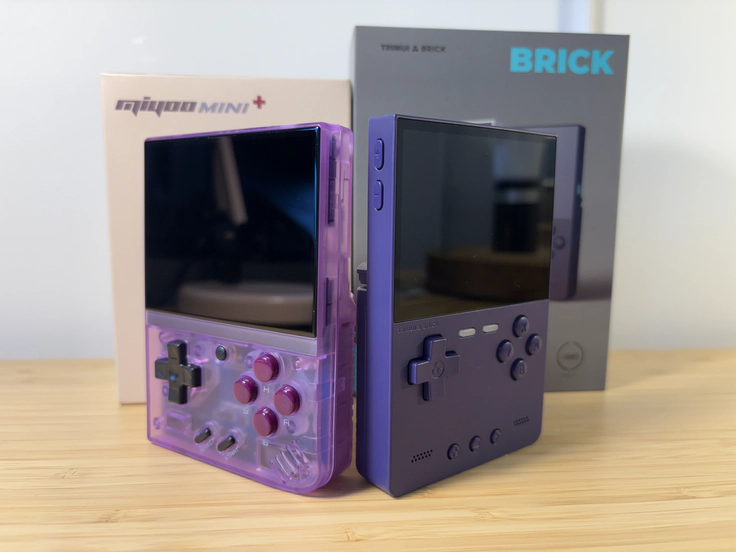 Retro gaming at its best: Mini vs Brick
Retro gaming is becoming increasingly popular, and choosing the right handheld is crucial. In this review, we compare two popular options: the Miyoo Mini Plus (MM+) and the Trimui Brick. Both devices have unique features. Which one is better?
TLDR: I switched from the Miyoo to the Brick.
Read on…
Design
At first glance, the differences are immediately apparent. The MM+ screen is slightly larger (3.5 inches) than the Brick’s (3.2 inches), and the MM+ comes in transparent purple, black, white, and Game Boy OG gray—colors retro enthusiasts will love. The Brick is available in black, white, purple, and a striking red.
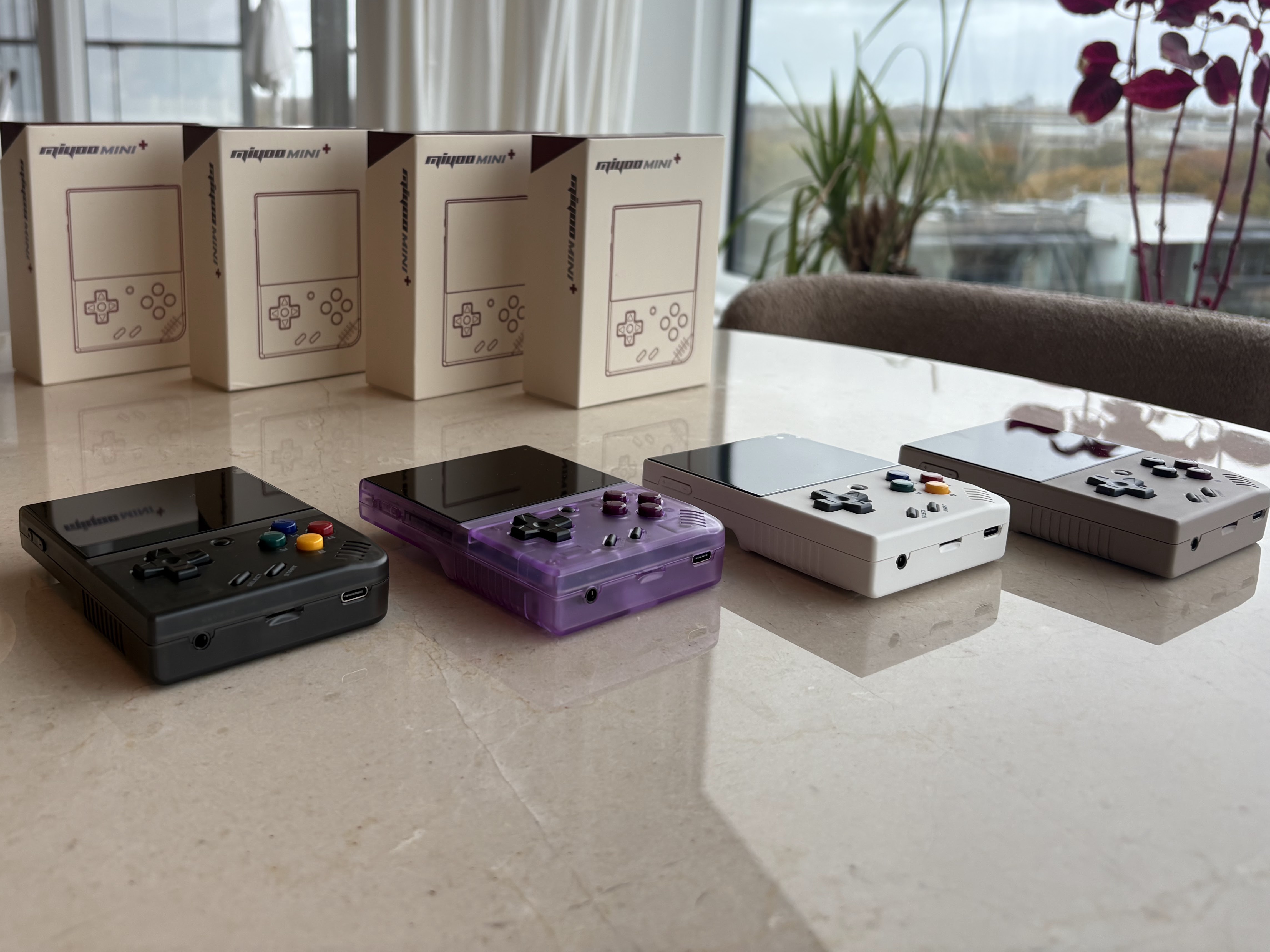 The MM+ is a simple yet premium device. Its matte plastic feels good to the touch, and the gray version offers extra grip and a cool retro look. The most popular color is the purple one in this photo—a nostalgic throwback to the Nintendo era with its translucent plastic and purple buttons. Even the speaker grille is reminiscent of the OG Game Boy, although it’s not in the correct position; I often found my thumb muffling the sound.
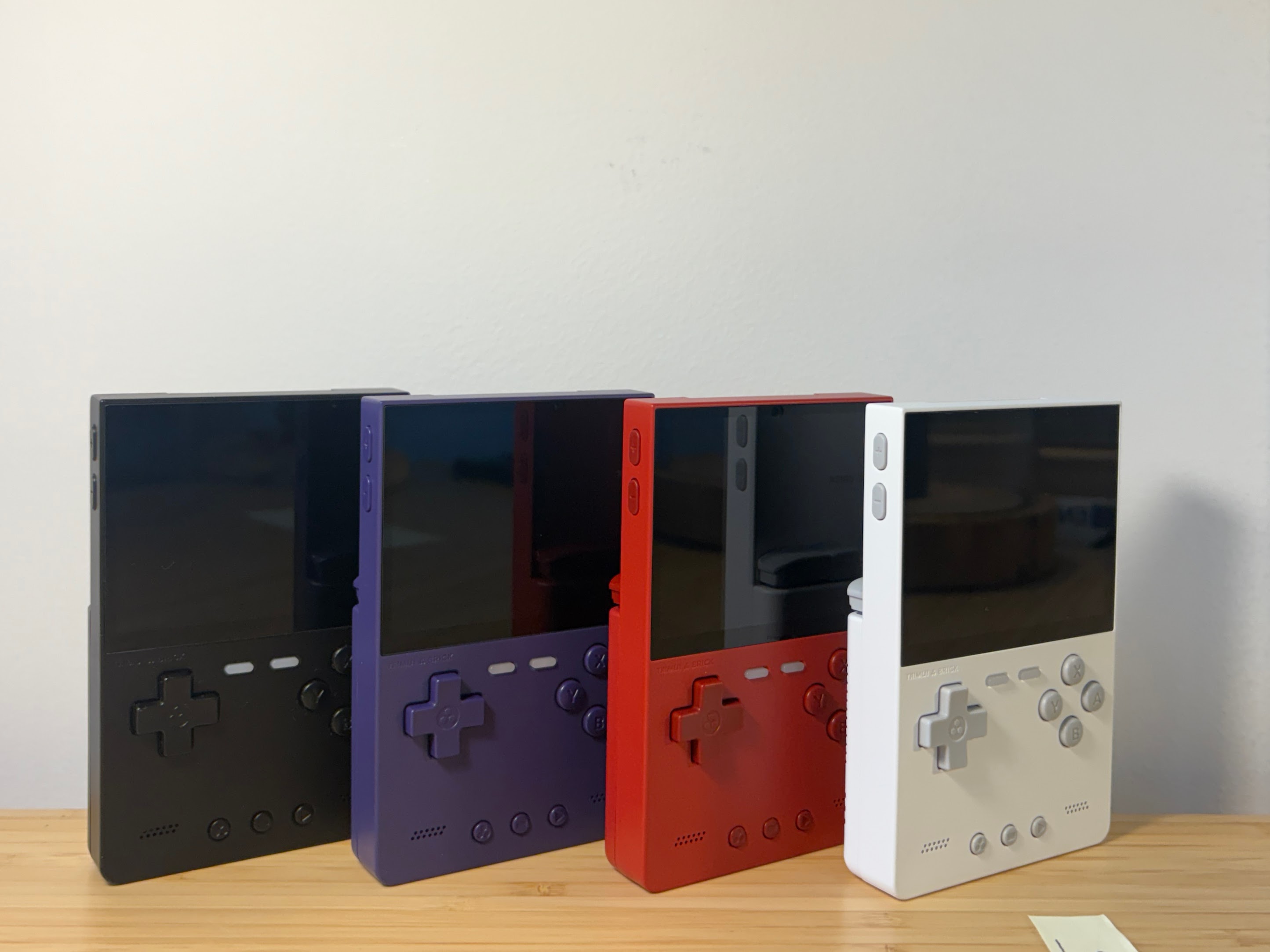 The Brick exudes pure luxury with its illuminated buttons and aluminum backplate. This premium design, coupled with the RGB lighting on the shoulder and menu buttons, gives the Brick a sleek, modern look. It also has dual speaker grilles, which is a welcome feature.
In terms of size, the Brick is slightly taller, while the MM+ is wider, giving it a more compact feel. Both devices are small enough to fit in your pocket. The MM+ is robust enough to toss in with your keys (especially with a screen protector and its lower price), but you’ll likely handle the Brick with more care.
Comfort
Comfort plays a significant role in retro gaming.
-
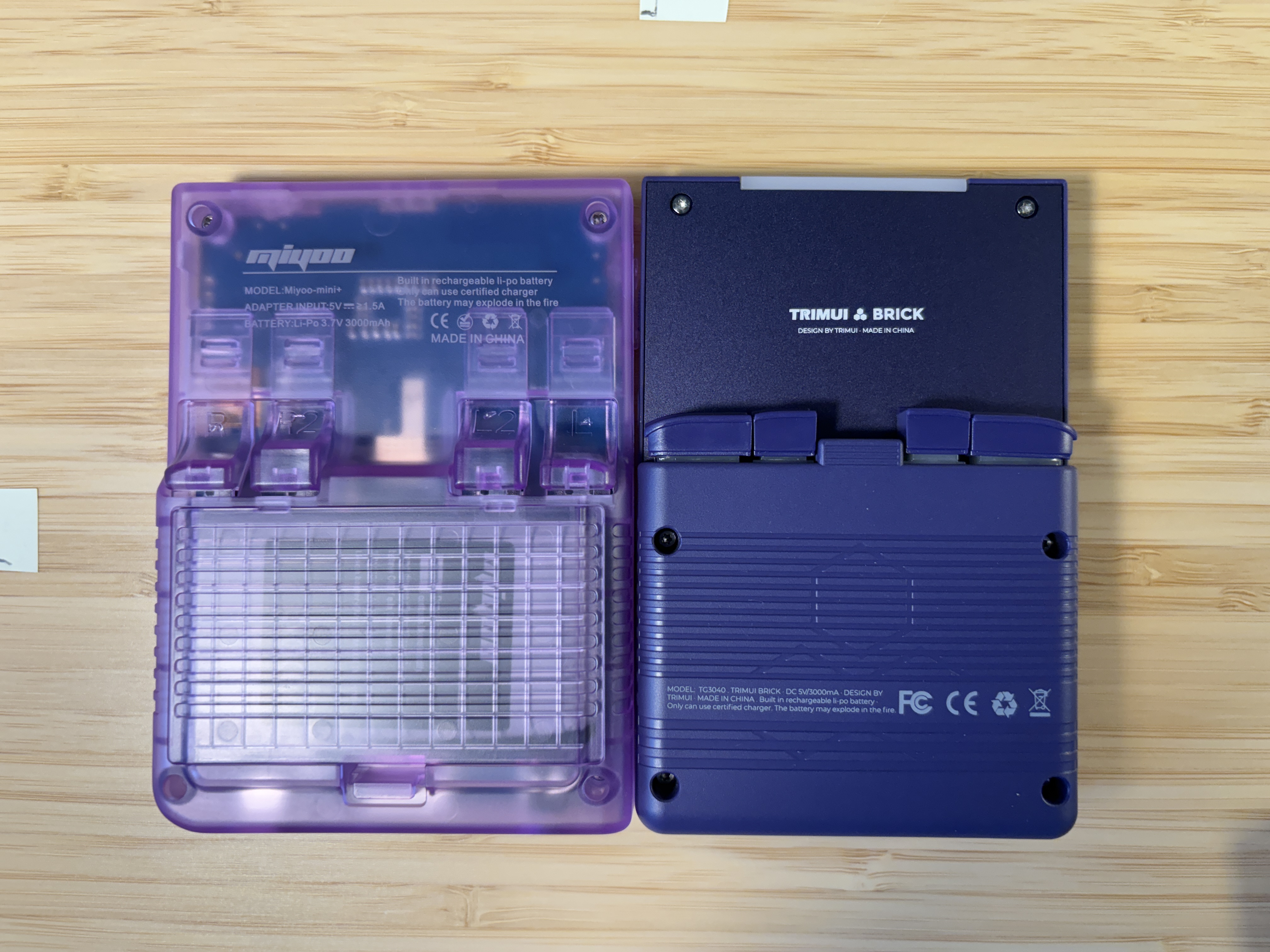
MM+: The buttons are perfectly placed, and the L and R buttons have a soft click—perhaps soft enough to bother a partner. For classic SNES games, the MM+ feels great in hand. However, for games requiring frequent use of shoulder buttons (like Street Fighter), the horizontal shape becomes less comfortable. The D-pad is excellent and among the best I’ve tested; it offers a tactile rubbery feel akin to the Game Boy. Initially firm, the buttons become smoother over time.
-
Brick: The Brick’s premium feel starts the moment you pick it up. The aluminum back and sturdy buttons feel solid. The ABYX buttons are slightly smaller but provide excellent feedback, as does the D-pad, which has a satisfying click. The shoulder buttons are soft and quiet.
The Brick includes extra mappable buttons, and even the default settings are handy. For instance, the side slider is set to mute by default but can be customized to toggle power-saving modes or disable Wi-Fi, depending on the OS. The Brick also features two extra menu buttons with customizable RGB lighting.
It even comes with an extra set of shoulder buttons with different finishes and heights. I found the default set most comfortable.
Screen
The screen is a crucial factor in your decision.
-
MM+: With a 640x480 resolution, the screen is bright enough for most conditions. During the day, the brightness never disappointed, and at night, it performed well at lower levels.
-
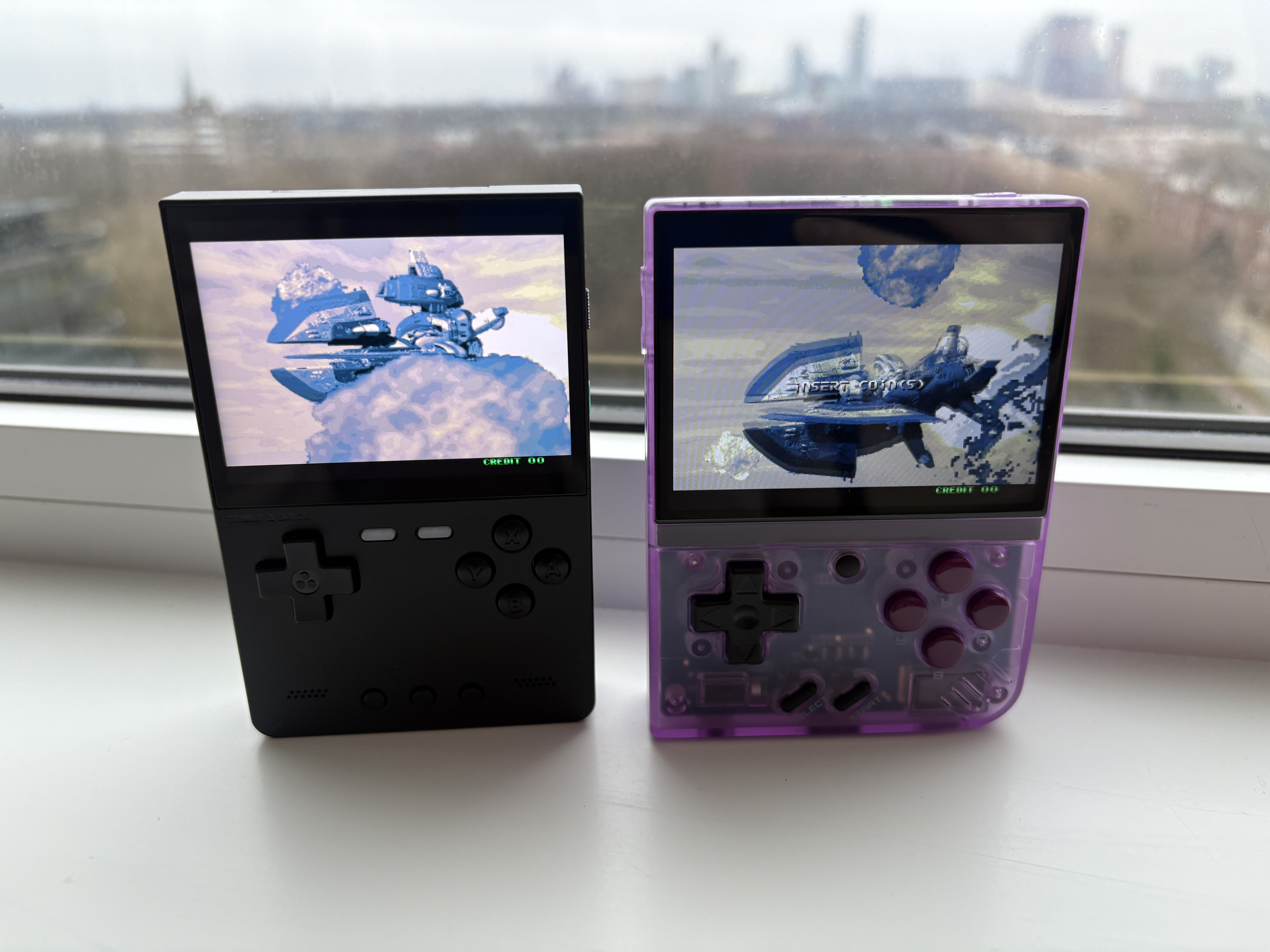
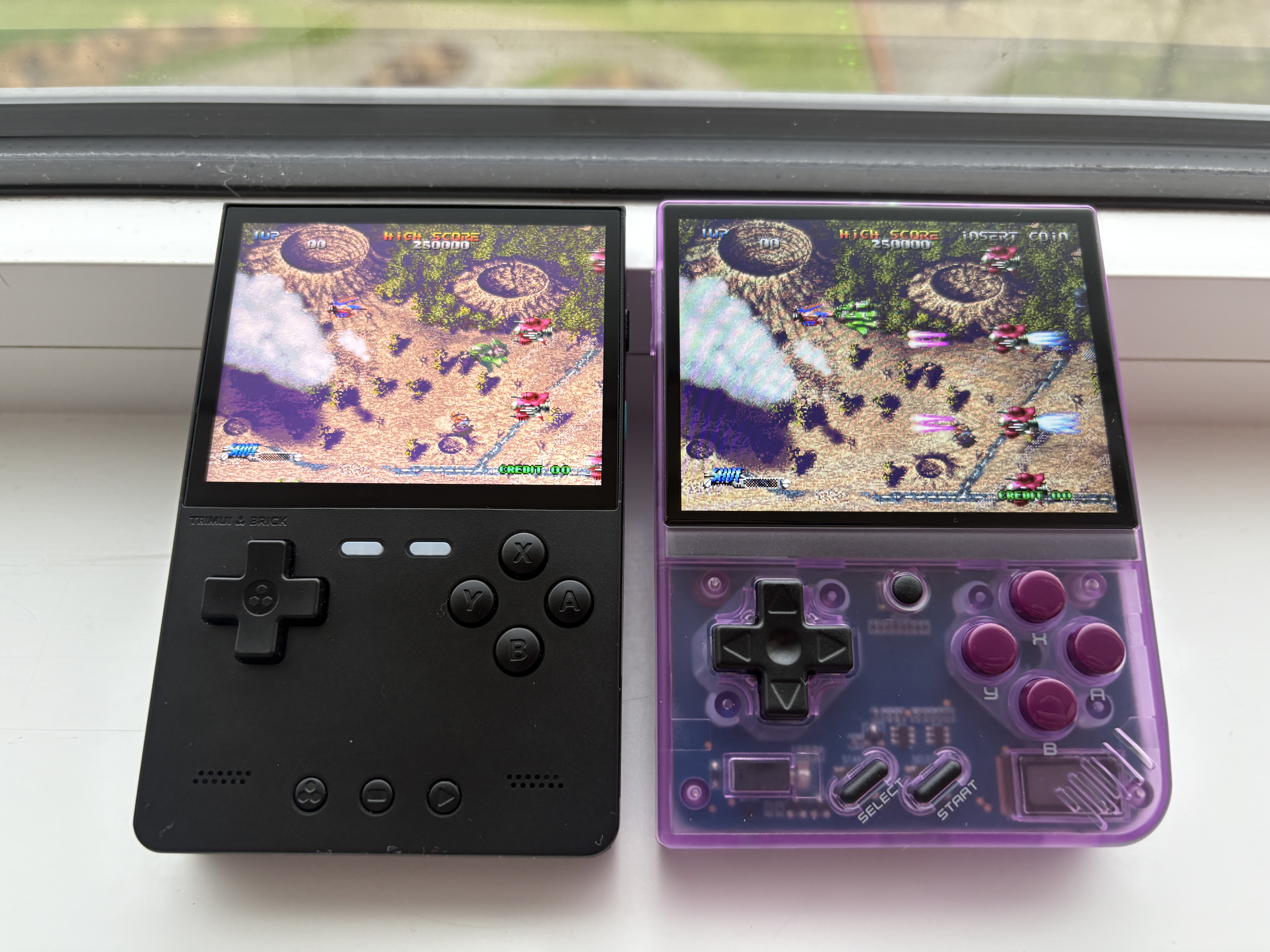
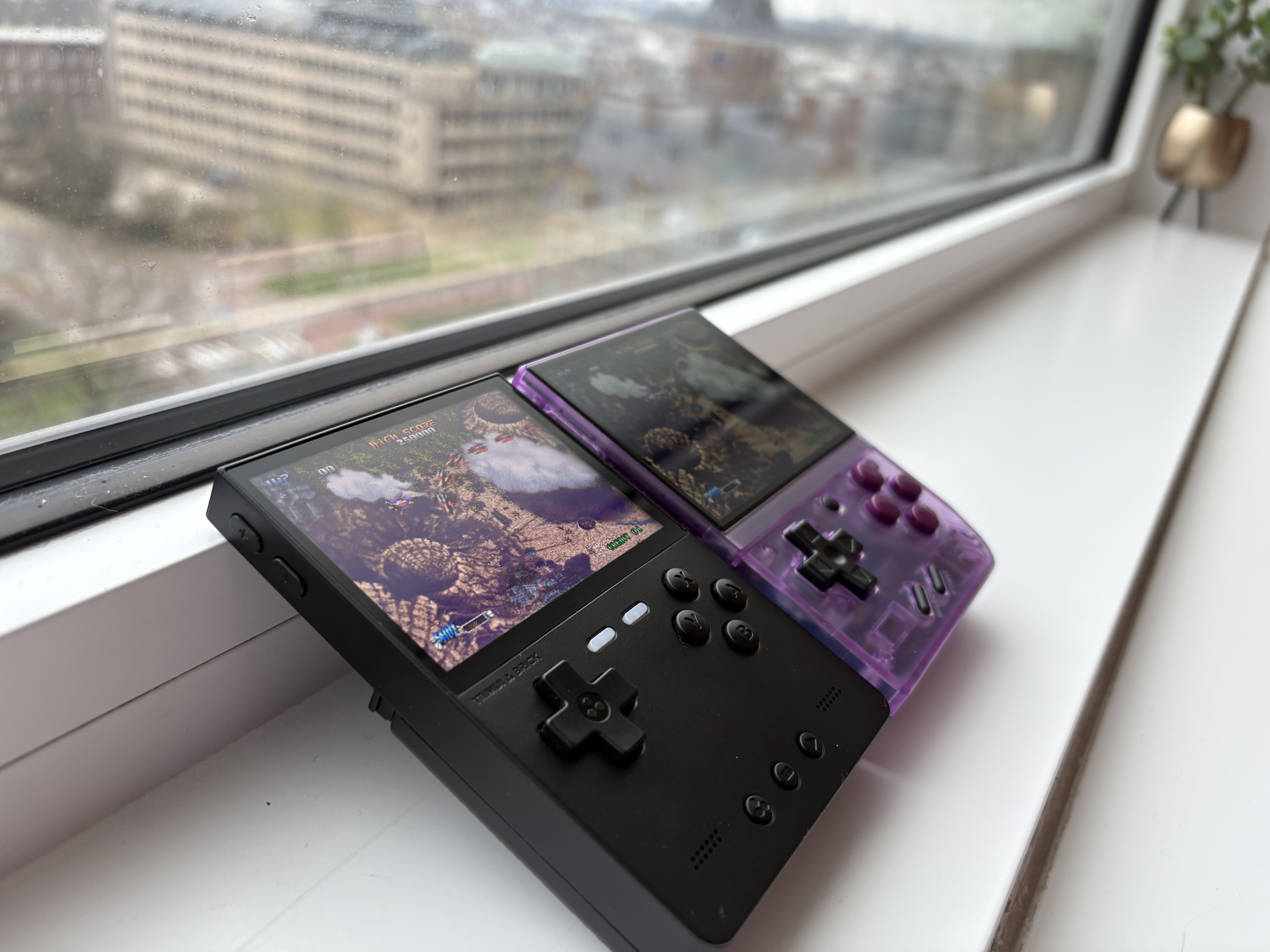
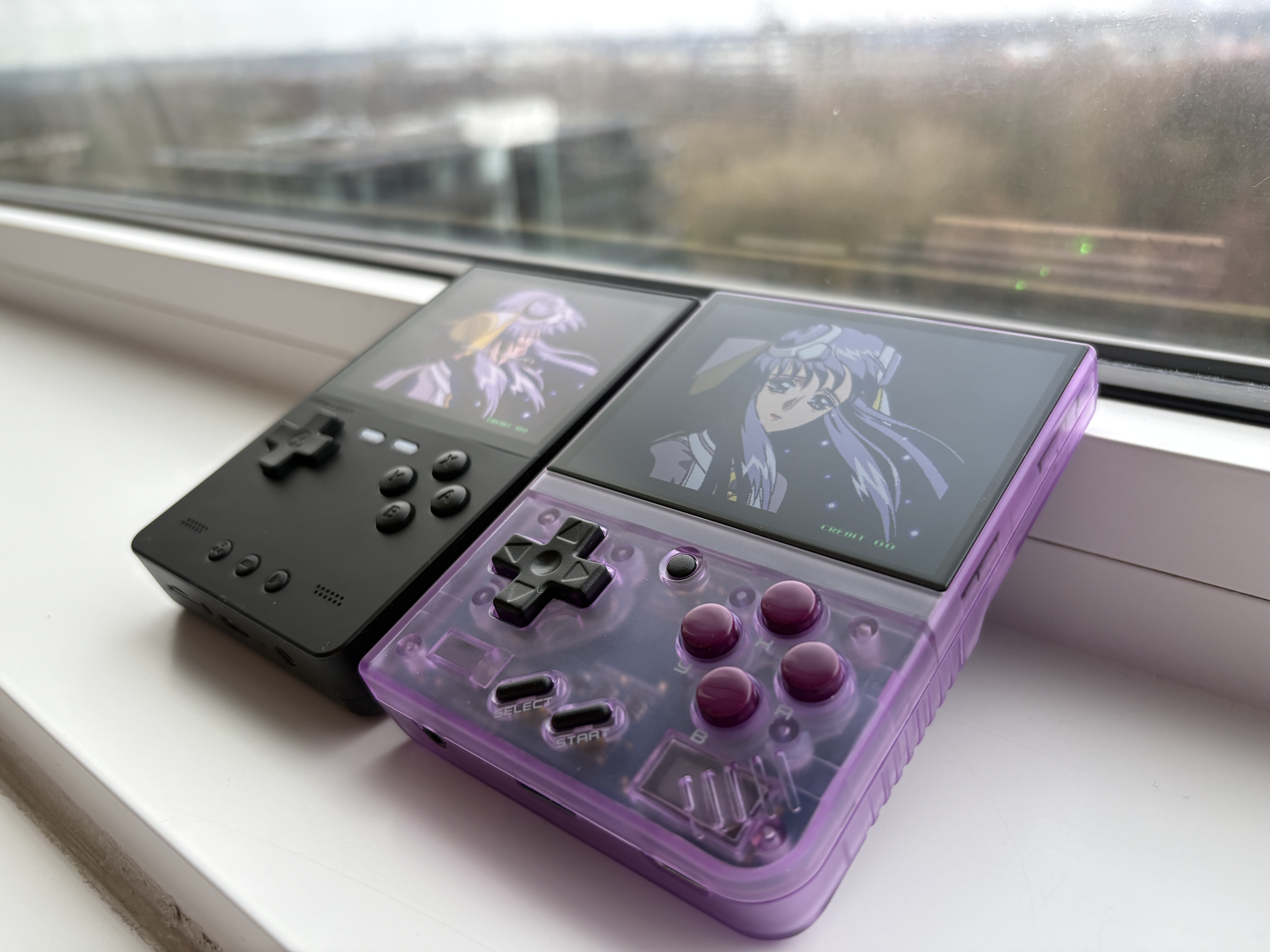
Brick: The Brick takes it up a notch with a sharper 1024x768 screen. Colors truly pop, especially in Neo Geo and higher-resolution games. While the screen is slightly smaller, its quality is a clear upgrade. The brightness is higher, and the viewing angles are better.
Here are some photos taken under different angles on a gray day with full brightness:
Games
A handheld’s power lies in the games it can run.
-
MM+: It handles everything up to PlayStation 1 games, although some PS1 titles don’t perform well. For SNES, NES, and Game Boy, the MM+ is a fantastic choice.
-
Brick: Here, the Brick shines. With its GPU and 1 GB of RAM (compared to the MM+’s 128 MB), it effortlessly runs PS1 games and even some N64, Sega CD, and PSP titles. If you’re after a broader range of playable games, the Brick is the better option.
Hardware
The Brick clearly outperforms in terms of specifications.
| Feature | Mini | Brick |
|---|---|---|
| Screen Resolution | 640x480 | 1024x768 |
| Processor | Dual-core ARM Cortex-A7 1.2GHz | Quad-core Allwinner H3 1.8GHz |
| GPU | - | IP-vr GE8300 660MHz |
| RAM | 128 MB DDR-3 | 1 GB LPDDR4x |
| Bluetooth | - | BT 2.1 + EDR / 4.2 |
| Battery Capacity | 3000 mAh | 3000 mAh |
| Wi-Fi | Yes | Yes, with multiplayer options |
| Weight | 200 grams | 159 grams |
Both devices feature a microSD slot, Wi-Fi, and a headphone jack. The Brick also supports Bluetooth 2.1.
Software: Stock OS and Custom OS
-
MM+: Installing OnionOS is a must. It enhances the MM+ with versatility and user-friendliness. You can put the device in standby and save automatically. OnionOS also looks sleek and offers numerous themes. Link: OnionOS Themes
-
Brick: MinUI feels tailor-made for the Brick. Its clean, simple interface complements the premium experience. Combined with powerful hardware, the Brick bridges the gap between the MM+ and more advanced devices like the Analogue Pocket.
Conclusion: Which is Right for You?
Your choice depends on your priorities as a gamer:
-
MM+: Ideal for an affordable, compact handheld for classic 8-bit and 16-bit games. Perfect for on-the-go and daily use. OnionOS remains the best OS I’ve encountered.
-
Brick: For those who want more—better performance, a sharper screen, and a luxurious design. Great for playing heavier systems like N64, PS1, and PSP.
Personally, the Brick is now my favorite, but the MM+ is still an excellent choice for those seeking a pure classic experience.
If this post helped you, I’d greatly appreciate it if you shared it with friends or acquaintances. If you’re looking for a Brick, MM+, or another retro device, check out my webshop retrogear.nl
-XXX-
Jorne